Laser Cutting vs. Turret Punching: A Sheet Metal Fabrication Guide for Melbourne Buyers
Choosing the right sheet metal fabrication process can save Melbourne buyers significant time, cost, and rework. Laser cutting and turret punching are two of the most widely used methods in metal fabrication, and understanding how each works helps engineers and buyers make smarter decisions before engaging a fabricator.
How Laser Cutting and Turret Punching Differ
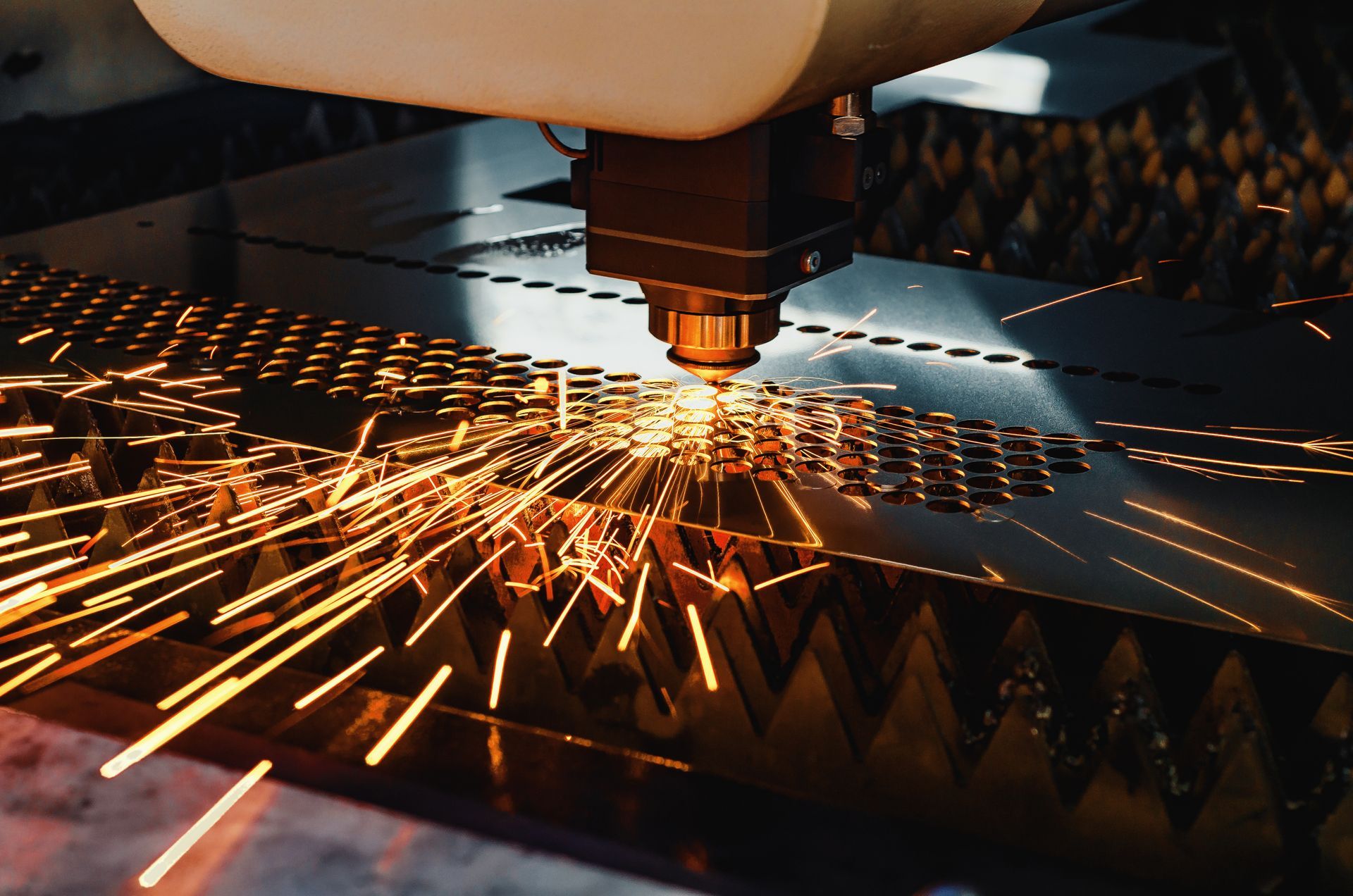
Laser cutting uses a focused beam of light to slice through metal with fine precision, producing smooth, clean edges and radius-free contours with minimal surface cleanup. Turret punching uses a rotating turret fitted with multiple punch tools to press holes and shapes into sheet metal using mechanical force.
The core difference is how material is removed. Laser cutting is a contactless process with no physical tool touching the metal. Turret punching is a contact process that may leave slight burrs on thicker materials but can also form features like louvres, dimples, and embossed shapes in a single pass, which laser cutting cannot replicate.
Which Sheet Metal Fabrication Process Suits Your Project?
Your choice typically comes down to four factors: material thickness, production volume, part complexity, and budget.
Material Thickness
Laser cutting handles a wider range of thicknesses across stainless steel, mild steel, and aluminium. Turret punching efficiently handles mild steel, stainless steel, and aluminium up to around 5 to 6 mm but may be limited on very thick stock.
Production Volume and Setup Costs
Turret punching can be cost-effective for medium to high-volume runs with repetitive hole patterns, as standard tooling is already available on most machines. Laser cutting suits low-volume, high-complexity parts where custom tooling would otherwise add cost.
Part Complexity and Tolerances
Laser cutting offers tighter tolerances and greater flexibility for intricate shapes, curves, and fine detail work. Turret punching performs well for repetitive standard shapes such as circles, rectangles, and grid patterns, making it faster and more economical for those applications.
Formed Features
Turret punching can add formed features such as knockouts, louvres, and countersinks during the same production run. Laser cutting does not offer this capability and would require a secondary sheet metal fabrication forming process.
When to Use Each Process
A practical way to think about it:
▸ Use laser cutting when parts have complex geometry, tight tolerances, or low production volumes where custom tooling is not justified.
▸ Use turret punching when the job involves high volumes, repetitive hole patterns, or requires formed features in the same run.
▸ Consider combining both processes for parts that benefit from punched features and laser-cut contours.
Working with a skilled metal fabrication manufacturer helps you determine the most cost-effective approach based on your drawings and volumes. Explore laser cutting services and turret punching services to learn more about each capability.
Ready to Choose the Right Process for Your Melbourne Project?
Beta Metal Spinning Co provides sheet metal fabrication services, offering both laser cutting and turret punching under one roof. Getting expert advice before committing to a process helps you avoid unnecessary cost and delays. Contact the team to discuss your project requirements, or call 03 9555 8444 to request a quote. You can also find Beta Metal Spinning Co on Google to read reviews and get directions.